
Diabetes Technology Highlights From ADA 2026

Abbott's Libre Duo sensor monitors glucose and ketones.
Here are some of the top technology highlights covered at the American Diabetes Association's 2026 scientific conference in New Orleans.
Broadening access to diabetes technology and developing new tools to make daily management easier, safer, and less disruptive were recurring themes at the conference.
Researchers presented the latest tech findings, including the expanded use of continuous monitoring (CGM) for people with type 2 diabetes, helping people with diabetes avoid the hospital with diabetic ketoacidosis (DKA), and simplifying life for those who use multiple daily injections, among other updates.
Dual Glucose-Ketone Could Give Earlier Warning of DKA Risk
 Ketones in the blood can rise before someone realizes they may be at risk for DKA. And DKA can occur without high glucose, when insulin levels are low. Abbott presented findings at ADA that showed nearly half of DKA cases are not recognized when someone is admitted to the hospital.
The company recently announced European approval for the Libre Duo and Libre Duo 10 Day, two new wearable sensors designed to continuously track both glucose and ketones in one device. The Libre Duo is approved for adults 18 and older, and the Libre Duo 10 Day is for people ages 2 and older. The Libre Duo systems are expected to be available in Europe later this year. The Duo is currently under FDA review.
A dual sensor that tracks both ketones and glucose could help people see when ketones are a problem and know when to take action – such as checking in with a doctor, changing an insulin pump site, taking correction insulin, or modifying a sick-day plan.
Dexcom G7 Helped People With Type 2 Gain Five More Hours in Range
The benefits of continuous glucose monitoring (CGM) for people with diabetes are well established, but research has been limited for those with type 2 who don't use insulin. Also, access can be uneven: Only about half of this group has insurance coverage for CGM.
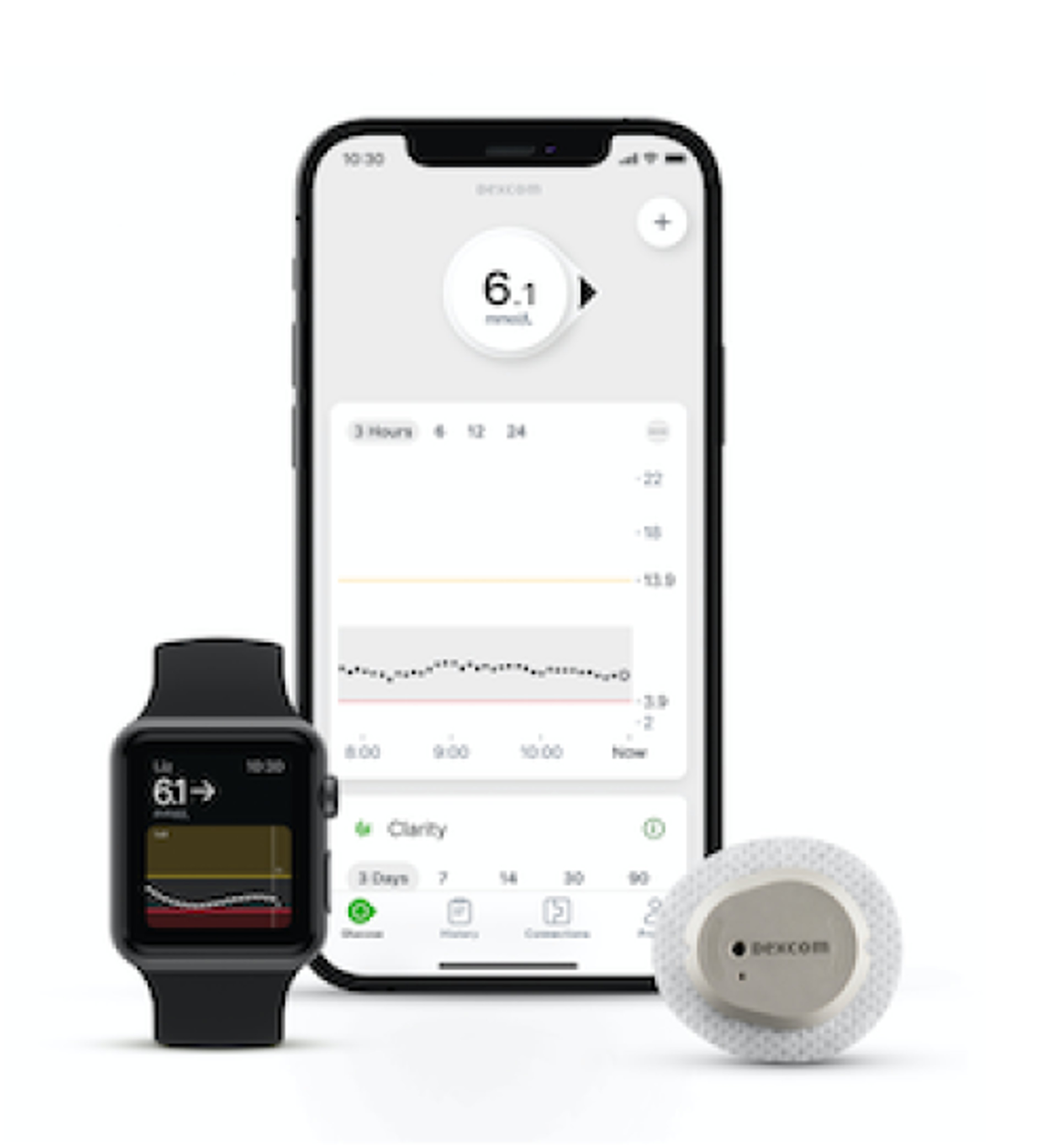
A new study presented at ADA showed significant benefits for people with type 2 diabetes who don't use insulin. The study involved 283 adults across 22 primary care practices in the U.S. The researchers compared a group using the Dexcom G7 CGM with people using finger-stick blood glucose meters. Everyone in the study received diabetes education on diet and exercise at the start, and participants continued their usual glucose-lowering medications.
Here are some of the key findings:
- By the end of the study, participants using CGM had an average time in range of 62% (70-180 mg/dL), compared with 41% in the finger-stick group. That translated to about five hours per day more time in range compared to the finger-stick group.
- The group using CGM saw their A1C drop by an average of 1.6% (from a starting point of 8.8%).
- At the end of the study, 68% of the CGM users reached an A1C below 7.5%, and 46% were below the recommended 7.0%.
- The benefits were consistent for participants using different medications, including metformin, GLP-1s, and SGLT-2 inhibitors.
- People using CGM also reported greater satisfaction with glucose monitoring, along with reduced diabetes distress and burden.
Insulet Shows Next-Generation Omnipod 6 Results

Current automated insulin delivery (AID) systems can reduce the burden of managing diabetes, but still require some interaction, such as when dosing for meals. And yet many people still spend time above their glucose target.
Insulet's in-development Omnipod 6 includes updates intended to keep users in automated mode more often, including during hypoglycemia, and has a more advanced algorithm that can deliver more insulin when needed. The system uses a lower glucose target of 100 mg/dL (a recent update allows Omnipod 5 users to use this tighter 100 mg/dL target).
A new study presented at ADA, which included 132 adults with type 1 or type 2 diabetes and children with type 1, found that the Omnipod 6 increased time in range compared to the current Omnipod 5. People in the study used each system for four weeks. With Omnipod 6, time in range increased to 77% compared with 73% on Omnipod 5 for people with type 1 ages 14 years and older and rose from 73% to 76% for people with type 2. Time in tight range (70-140 mg/dL) also increased, from 47% with Omnipod 5 to 54% with Omnipod 6 in people with type 1 ages 14 years and older, and from 43% to 48% for people with Type 2.
In an optional phase where users were asked to dose insulin no more than three times per day, people gave fewer boluses, while time in range stayed close to the initial Omnipod 6 results. Insulet has said it plans to launch the Omnipod 6 in 2027.
AID Access Expanding for Pregnancy and Type 2
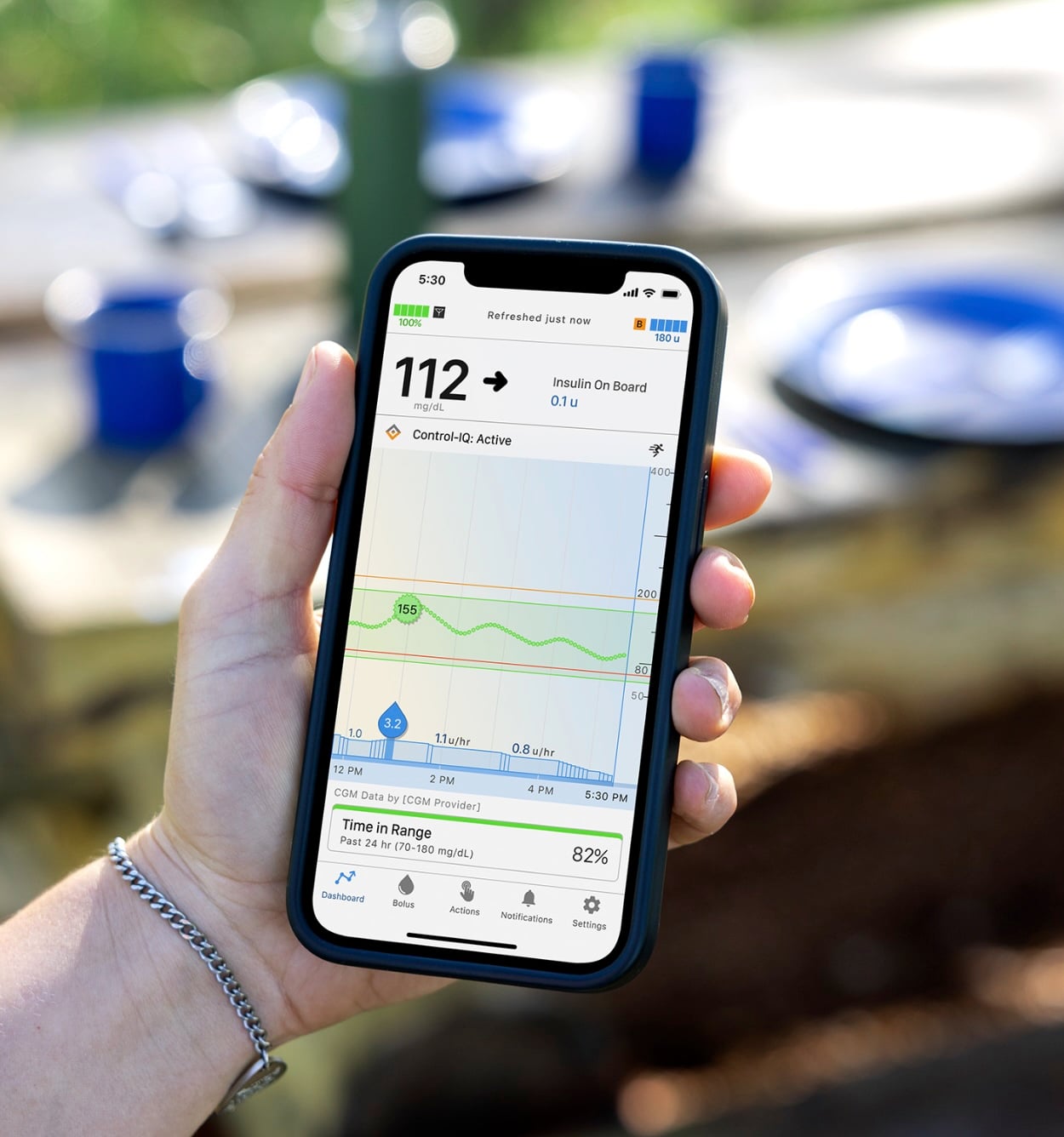 Tandem recently announced that its Control-IQ+ automated insulin delivery (AID) systems have received approval for expanded use in Europe. The t:slim X2 and Tandem Mobi AID systems can now be used by people with type 1 diabetes during pregnancy and by adults with type 2 diabetes who use insulin (Control-IQ+ was previously approved in the U.S. for type 2 diabetes and more recently for type 1 in pregnancy).
In a recent study of Control-IQ+ for pregnancy in type 1, people spent 12.6 percentage points more time in the pregnancy glucose target range (63-140 mg/dL), compared with those using standard therapy.
In another study of adults with type 2 diabetes, those using Control-IQ+ had an average A1C reduction of 0.9%, compared with 0.3% for those not using the AID system. Among people who started the study with an A1C of 9% or higher, A1C fell by 2.3%.
Expanding the use of AID systems to more people could help reduce the feeling of constant decision-making that often comes with insulin therapy.
MiniMed's New Go Smart Pen System Pairs With CGM
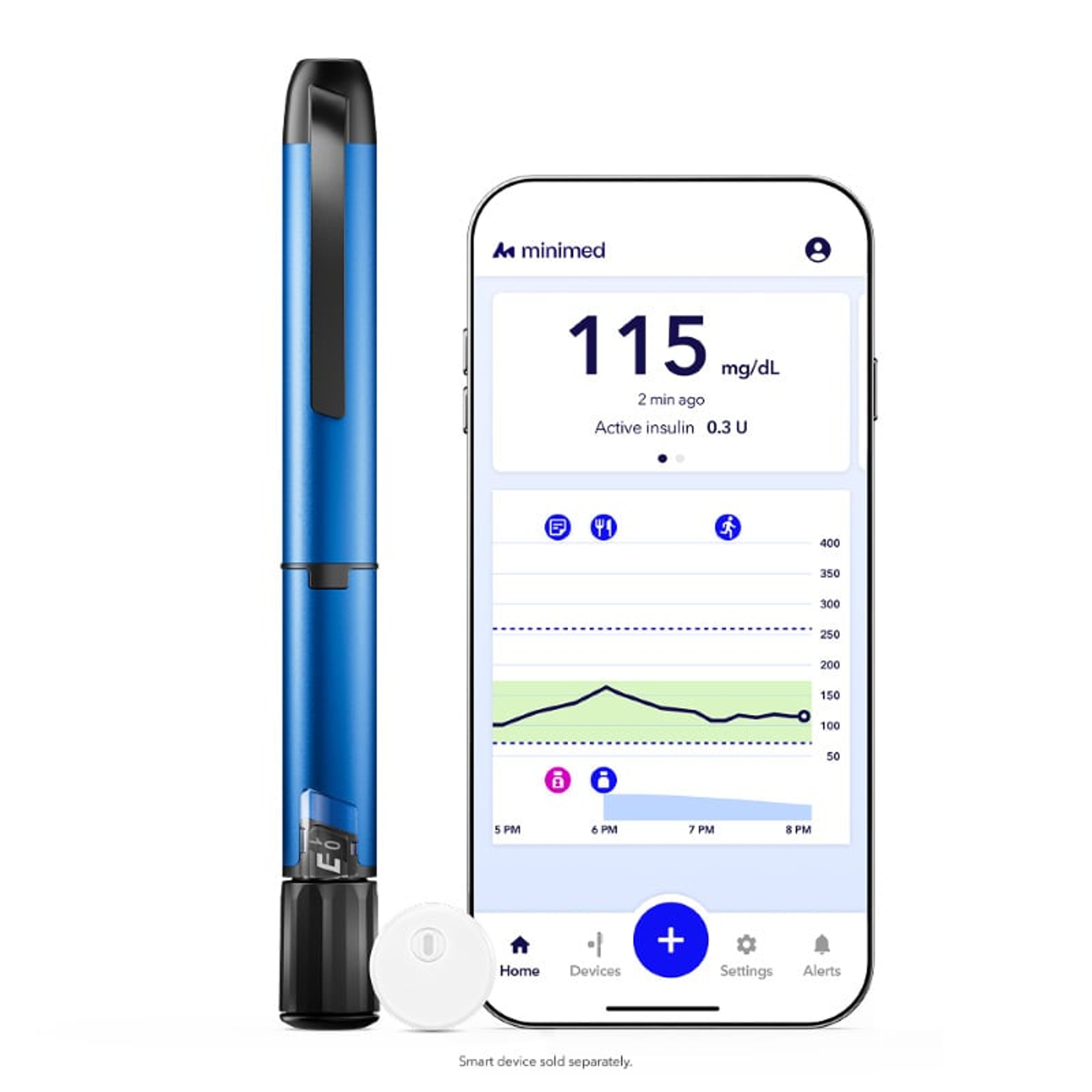
For people with type 1 and type 2 diabetes who use multiple daily injections (MDI), time in range can suffer when doses are forgotten, late, or miscalculated. At ADA, MiniMed demonstrated its smart multiple daily injection (MDI) system, which recently became available in the U.S.
The MiniMed Go system combines the InPen connected smart insulin pen and Instinct CGM sensor, made by Abbott. By pairing the InPen with a CGM and the MiniMed Go smartphone app, the system can recommend adjustments to insulin doses and send alerts if a dose is missed. The system is FDA-cleared for those 7 years and older and for children 2 to 6 years old, when supervised by an adult. MiniMed said new users can start for $125 for the InPen and $60 for the Instinct CGM.
In studies, connected pens have been shown to increase time in range, especially for those who are having trouble meeting their goals. MiniMed Go also connects with CareLink software, which can help make reports easier to share with a healthcare provider.
twiist AID Study Shows Improved Time in Range for Adults With Type 2

People with type 2 diabetes who use insulin may still struggle to manage their blood sugar – even when they use other diabetes medications. New research suggests adding automated insulin delivery could make it easier to keep glucose levels in range.
A new study evaluated whether automated insulin delivery (AID) systems could help adults with type 2 who take insulin, most of whom were also using a GLP-1 or SGLT-2 medication. People in the study began using the twiist AID system, which combines an insulin pump with the Tidepool Loop algorithm to automatically adjust insulin doses based on CGM readings.
The study included people using multiple daily injections, insulin pumps, or basal insulin only. After 13 weeks, time in range improved from 57% to 73%, A1C dropped from 8.1% to 7.4%, and time spent with low blood sugar decreased slightly.
Using an AID system helped people spend substantially more of the day in range – about four extra hours. For adults with type 2 diabetes who use insulin, the findings could offer a reason to ask a healthcare provider whether AID might help make treatment easier or more effective.
The study included people using multiple daily injections, insulin pumps, or basal insulin only. The AID system helped people spend substantially more of the day in range – about 4 extra hours. After 13 weeks, time in range improved from 57% to 73%, A1C dropped from 8.1% to 7.4%, and time spent with low blood sugar decreased slightly.
Year-Long CGM Could Simplify Automated Insulin Delivery
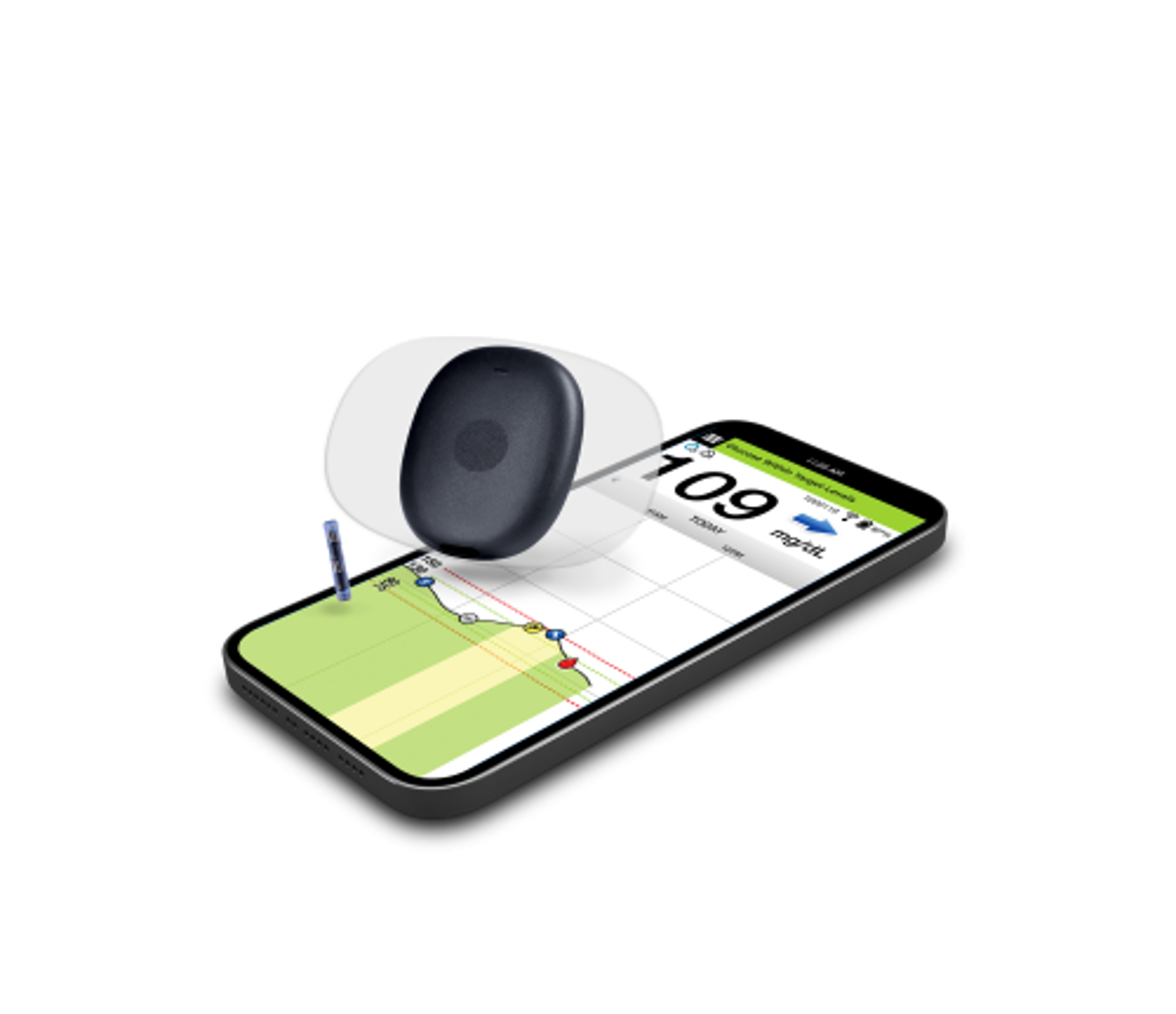
Automated insulin delivery (AID) systems can help reduce some of the daily work of using insulin, but they still require people to change pump sites and replace CGM sensors.
A study presented at the 2026 ADA Scientific Sessions analyzed results from 153 people with type 1 who used Eversense 365, an implantable year-long CGM sensor, paired with the twiist AID system. After the first 30 days, average time in range (70-180 mg/dL) was about 76%, with a glucose management indicator (GMI) of 6.78%. Median sensor wear time was 99%.
Pairing twiist with a one-year CGM could help keep the sensor connected longer to AID system, while also reducing the need for regular sensor changes.