
All Eyes on DME: Campaign Spotlights Eye Health and Diabetes

A new campaign launched by diaTribe and Genentech aims to empower and educate people about diabetes-related eye disease. Here’s what you can do today to protect your eye health.
Many people live with diabetic macular edema (DME), a serious eye condition and leading cause of vision loss in people with diabetes.
DME is a complication of diabetic retinopathy, another common eye condition in people with diabetes. DME happens when damaged blood vessels in the macula of the eye start to leak, causing symptoms like swelling, blurry vision, dark spots, and, in severe cases, vision loss.
Though many cases of DME can be prevented, the condition is still quite prevalent due to issues around access, education, and screening for eye health in people with diabetes, particularly in minority communities, where the rates of DME are up to three times higher.
To help address these barriers, diaTribe and Genentech partnered to launch All Eyes on DME, a new campaign that aims to spread awareness and educate people at-risk for or living with diabetes-related eye conditions like DME. Also partnering in the campaign is actor and comedian Damon Wayans, who wanted to share his journey (and, of course, a joke or two) with type 2 diabetes to open up the conversation about what is often a stigmatized or less talked about topic: eye health and diabetes.
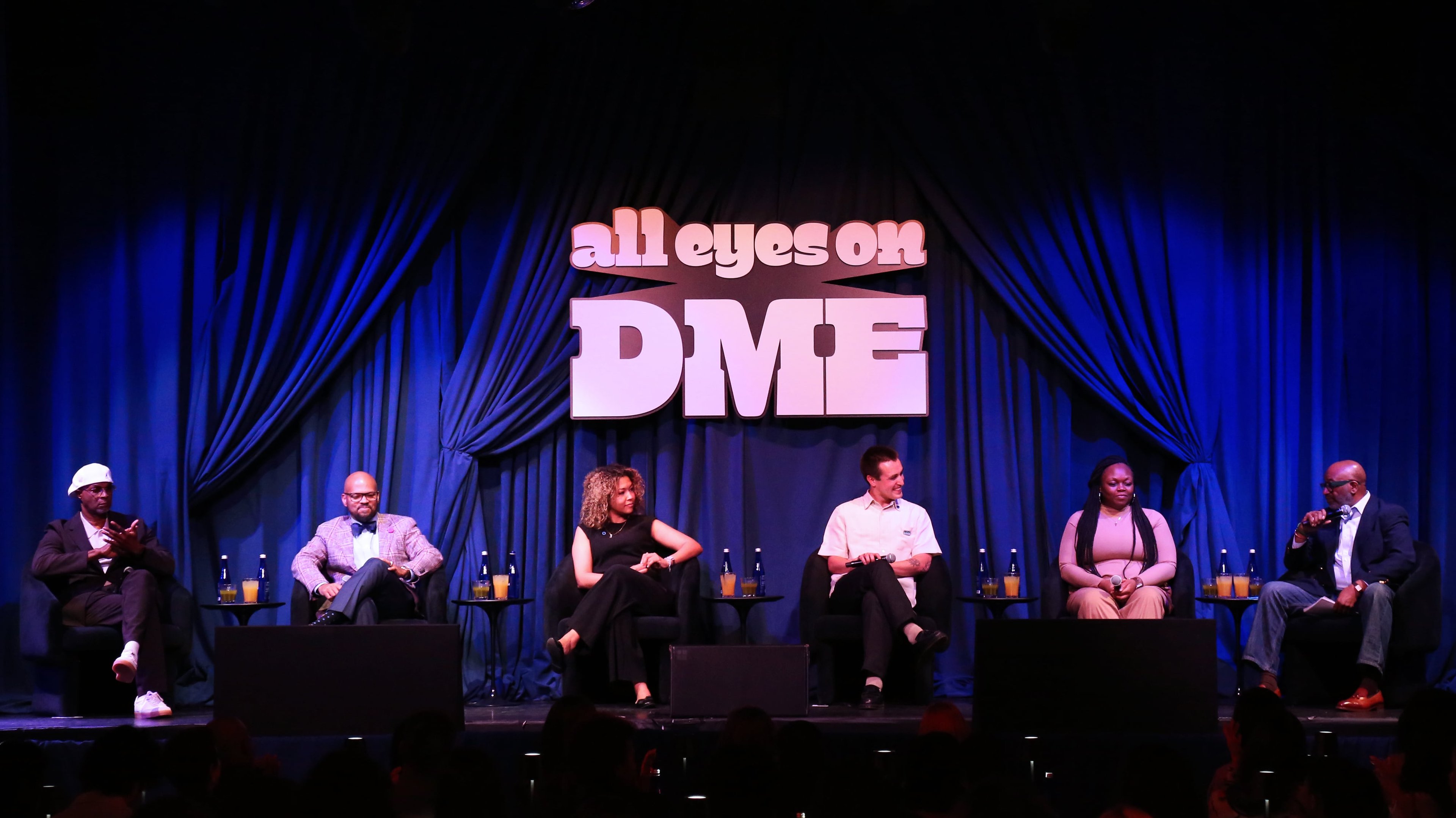
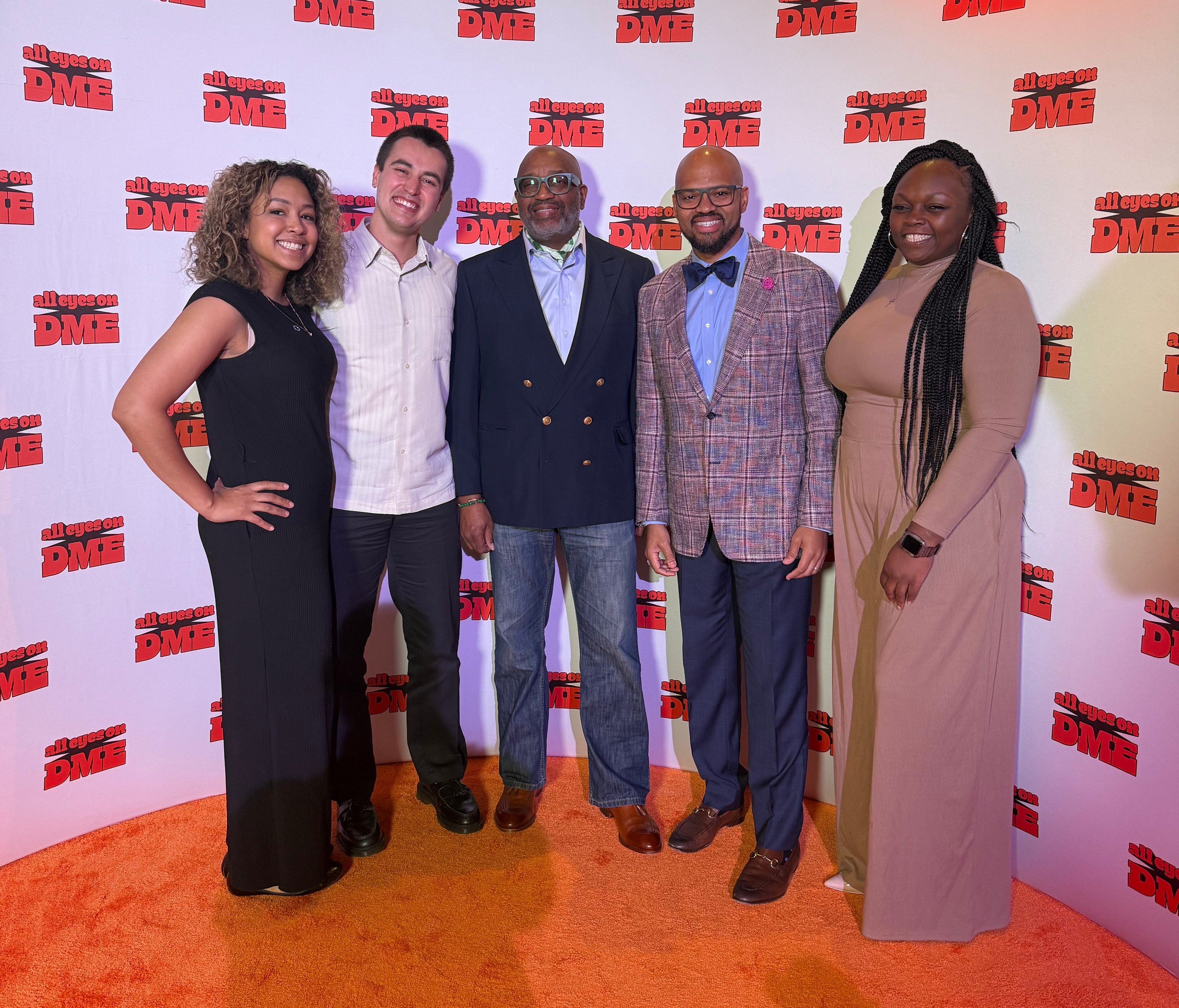
One of these important conversations happened recently at the All Eyes on DME launch in New York City, where Wayans joined a panel of experts, advocates, and people living with DME to talk about diabetes-related eye disease and how to help prevent it.
Getting the message out earlier
Serena Valentine, a Texas-based diabetes peer educator and patient advocate who lives with diabetes-related retinopathy, said she wished she had known more about DME and eye complications beforehand, not knowing that her own condition would progress to vision loss in both eyes.
When Valentine first started experiencing symptoms like floaters and blurry vision, she didn’t have insurance, which forced her to delay seeking care. By the time she was eligible for Medicaid, she was shocked when her eye doctor informed her that she had retinopathy in both eyes.
“I honestly was very upset because I’ve had diabetes for a long time and no one really explained this to me,” Valentine said. “They would say, ‘Oh, you know you could go blind,’ but I was like, okay, it’s an urban legend.”
But eye diseases aren’t just urban legends. Many people experience few to no symptoms of diabetes-related retinopathy early on, so it can be easy to assume everything is fine.
“People need to hear about how this can happen all of a sudden. You might not even be thinking something’s wrong, and you blink your eye – which is exactly what happened to me – and the vision is gone,” she added.
Comedian and diabetes advocate Chelcie Rice, who lives with type 1 diabetes and vision loss, said he had a very similar experience to Valentine’s.
“Many would assume once they receive a diagnosis that information and guidance will come automatically, but that’s not always the case,” he said. “All this information we’ve been blessed with and have access to doesn’t make it into lower-income communities. I think it’s getting to the point now where we need to start meeting folks where they are.”
Wayans agreed, adding that an important step to better care for people in marginalized communities, who are often at higher risk for more severe diabetes complications, is talking openly about it.
“I think we need to break cycles – in the Black community, especially. My dad only went to the doctor twice: once when he was born and once when he died,” he joked. “So when I grew up, it was like learned behavior.”
When Wayans first started experiencing diabetes symptoms, he chalked it up to too much work and not enough sleep. Even when his symptoms started getting serious, Wayans said he would have never gone to the doctor if his sister hadn’t forced him to. At the time he was diagnosed with type 2 diabetes, his blood sugar was 535 mg/dL, and he almost went into a coma.
“I remember being at the doctor and seeing his mouth moving, but I didn’t hear anything after ‘diabetes.’ He sounded like Charlie Brown’s teacher,” Wayans said.
“When you hear you have diabetes, it scares you to your core because in my family, I’ve seen so many people not do anything about it – I’ve seen the repercussions of inaction,” he said. “But I told myself, okay, it’s what I feared: diabetes. What are you going to do about it?”
Wayans embraced changes to his eating patterns to support his diabetes management, sharing his pride in his 20-bed vegetable garden. He also established a consistent exercise routine, engaging in weightlifting and yoga. He also emphasized the importance of good sleep and stress management for blood sugar management. Though he initially required insulin to manage his blood sugar levels, he was able to wean off insulin and now manages his diabetes with lifestyle changes and the help of a continuous glucose monitor (CGM).
Using comedy to reframe the message
A huge part of successful diabetes management is feeling empowered and motivated. But there is unfortunately a lot of stigma and fear when it comes to diabetes – especially diabetes-related complications – that may lead people to believe the condition is their fault.
The blame and shame that result from negative stereotypes and attitudes surrounding diabetes are so significant that many people avoid or even stop seeking the care they need. Historically, this is even a bigger issue in marginalized communities, where institutional racism and healthcare biases can be big barriers to people getting the care they need and deserve.
Whether it’s at the doctor’s office, work, or dinner out with friends, Matthew Garza, director of the dStigmatize program at diaTribe, reinforced the importance of reframing language when talking about diabetes.
“When people are being talked to by their doctors, around eye health in particular, they’re being exposed to phrases like, ‘If you don’t change this, you’re going to go blind’ over and over. That’s not motivating,” Garza said.
“What we really want to do is make sure that we’re being respectful, positive, and encouraging. We need to start avoiding this idea of punishing people with our language. Motivational language is what's actually going to get people to want to change their behaviors,” he added.
Combating stigma and fear-based language is one of the reasons diaTribe launched Spoonful of Laughter, a movement that uses comedy to help educate people, as well as share the highs, lows, and a few laughs of lived experience with diabetes.
Connecting and sharing information about diabetes through comedy is another reason Wayans wanted to get involved with the All Eyes on DME campaign.
“I think diabetes is still thought of as a bad word. I remember even in my family when I got diagnosed, no one wanted to be around me. They stopped inviting me to barbecues and birthday parties – instead, I’m getting invited to colonics,” he joked.
“But the good thing about my family is we laugh and joke a lot, so we do have these conversations now,” he said. “I get roasted a lot, but it’s okay, because at least we’re talking. Laughter tends to let the guard down. Of course, a few jokes can’t cure DME, but when we find humor in tough situations, it can be easier to engage in important conversations.”
Finding the right kind of care
Dr. Matthew Cunningham, a vitreoretinal specialist (ophthalmologist) who treats diabetes-related eye conditions like DME, said one of the most important things you can do for your eye health, especially for people at risk of vision-threatening conditions like DME, is to get annual eye exams.
“Many people with diabetes who have DME have no symptoms – their vision might be great. That’s the importance of these annual eye exams and early detection,” he said.
It’s important to note that testing for DME goes beyond a regular eye exam; people with diabetes need to look for an ophthalmologist or diabetes-related eye specialist who can perform eye dilations needed for specialized retinal exams.
In cases where symptoms have progressed to the point where more intensive treatment is needed, Cunningham explained the importance of finding a doctor you can talk openly with.
“It’s really important for the patient to feel empowered,” Cunningham said. “I think the most beneficial doctor-patient relationships are the ones based on honesty, where people can come in and feel comfortable asking questions and share what they’re experiencing. You can guide them outside of just being the person injecting them with medicine in their eye.”
Eritrea Mussa has lived with diabetes since age 8 and was diagnosed with DME in 2020. She said one of the most important things anyone with diabetes can do to take care of themselves isn’t just finding any doctor: it’s finding the right doctor.
“I like to think about it like dating. You wouldn’t date someone who disrespects you all the time, so why would you show up to a doctor you don’t feel is taking your matters seriously?” Mussa said.
“It’s very much up to me what the situation is going to be like. I have the option to look up treatments, get a second opinion, and go on a third or maybe a fourth date. I’ve been really lucky, I’m still with the same doctor who diagnosed me – we’re in a long-term relationship,” she said with a laugh.
Protecting your eyes: What you can do today
If there’s one big takeaway from the All Eyes on DME campaign, it’s this: Don’t wait to get your eyes checked. Cunningham said it’s critically important that if you live with diabetes and notice any changes in your vision, no matter how minor, immediately get it checked out. Taking action by getting routine eye exams can detect DME early, which leads to faster treatment and may slow the progression of vision loss.
“Never ignore sudden vision loss, double vision, distortions of vision, or any type of dark spots. These are all signs and symptoms of DME,” Cunningham said.
Even if your vision seems perfect, the best thing you can do to be proactive and reduce the risk of any future problems is to get an annual eye exam. Valentine said losing her vision was what ignited a fire in her to become a diabetes educator and share all the information she didn’t have before her own diagnosis with people in her community.
“As a peer educator, I do a lot with diabetes education and sharing everything that you need to know about doctor’s visits and what questions to ask,” she said. “They’re there to help you, and that open communication is good – it made me turn over a new leaf in my life after I was diagnosed.”
Diabetes educators can be a huge asset to care, particularly with a shortage of endocrinologists in the country, and may be covered by Medicare and Medicaid. If you don’t have an ophthalmologist or aren’t sure where to start, the All Eyes on DME campaign has more information on DME, prevention, finding an eye care professional, and tips for preparing for conversations with providers.
Learn more about eye health and diabetes here: