
Creating the Roadmap for Type 1 Fighters: Jon Kunneman’s Rise in MMA

After being diagnosed with type 1 diabetes at age 11, Jon Kunneman was told being a professional athlete wasn't in the cards. Today, he's a professional MMA fighter – and hopes to be the first person with type 1 to win a UFC fight.
For people diagnosed with type 1 diabetes, the news often comes with a long list of things we’re told we can’t do.
You can’t be a pilot.
You can’t join the Army.
You can’t be an astronaut.
You can’t [insert profession/activity/hobby here].
And for kids with big dreams, those “cant’s” may echo for years – until someone comes along and breaks the barrier.
That’s why firsts matter.
Think of NFL tight end Mark Andrews, who plays for the Ravens and checks his blood sugar between downs. Think of Lauren Cox, the first player to prove that type 1 diabetes isn’t a barrier to playing in the WNBA. Think of Gary Hall Jr., the Olympic gold medalist who had to fight to have his insulin approved by the Olympic medical committee. Or Gary Forbes, who proved that a person with type 1 diabetes could compete at the highest level in the NBA.
These athletes don’t just demonstrate that success is possible; they provide a roadmap for others to follow. They turn “you can’t” into “watch me.”
Professional mixed martial arts (MMA) doesn’t have a roadmap for people with type 1 diabetes…yet.
Enter Jon Kunneman. Diagnosed with type 1 diabetes at age 11, Jon was told in the ER that he probably wouldn’t be able to become a professional athlete. Today, he’s 10-0 as a professional MMA fighter, chasing history as the first person with type 1 diabetes to win a fight in the Ultimate Fighting Championship (UFC).
Kunneman came to the diabetes community’s attention through a candid Reddit AMA where he answered questions about fighting and training with type 1 diabetes. In this conversation with diaTribe’s Derek Helm, Kunneman talks about diabetes stigma, going into diabetic ketoacidosis (DKA) on a mountain, navigating athletic commissions and insulin exemptions, and why he believes visible “firsts” can change everything for people with diabetes.
Derek Helm: Can you tell us about when you were first diagnosed?
Jon Kunneman: I was diagnosed at 11, and at the time, it felt like my life had flipped upside down.
For a long time, I was pretty private about diabetes. Even some people on my fight team didn’t really know what it meant. Then, before one fight, during fight week, I had a really bad low, then rebounded super high, but still cut and made weight – and ended up winning.
Looking back, I thought, “If only people could see what I went through with diabetes that week and still made it to the fight.” Around that time, I posted on Reddit, shared more of my story, and people started messaging me things like, “I was considering suicide because of type 1, and your post gave me hope.” That changed everything. It made me realize I could actually use this platform to help people.
Type 1 sucks, but you can still do amazing things with it. It can be a fuel source – it forces you to be disciplined and pushes you to do hard things. Before a fight, when I’m looking for motivation, I think, “Most people aren’t doing this with type 1.” To me, that’s a testament to everyone with diabetes who still shows up and does what’s expected of them – on top of managing a serious disease.
As a kid, I never had a fighter or someone in my sport to look up to who had type 1. That’s a big part of why I’m open now: I want the next generation to have that.
Helm: How did you manage diabetes when you first started training, and how has that changed?
Kunneman: Early on, I was very old school – multiple daily injections and fingersticks. I tried a pump but had a lot of occlusions and went back to shots. I ate clean, lifted a lot, and my A1C was usually 7-8%. I got really good at feeling highs and lows, so sometimes I’d go too long without checking. It wasn’t perfect, but it got me by.
The big wake-up call came last December. I was climbing La Plata Peak in Colorado – one of the peaks above 14,000 feet. My buddy gave me an electrolyte packet that I didn’t realize had a ton of carbs. Usually on those climbs, my blood sugar runs low, so sometimes I don’t bolus for small things because you’re burning so many calories.
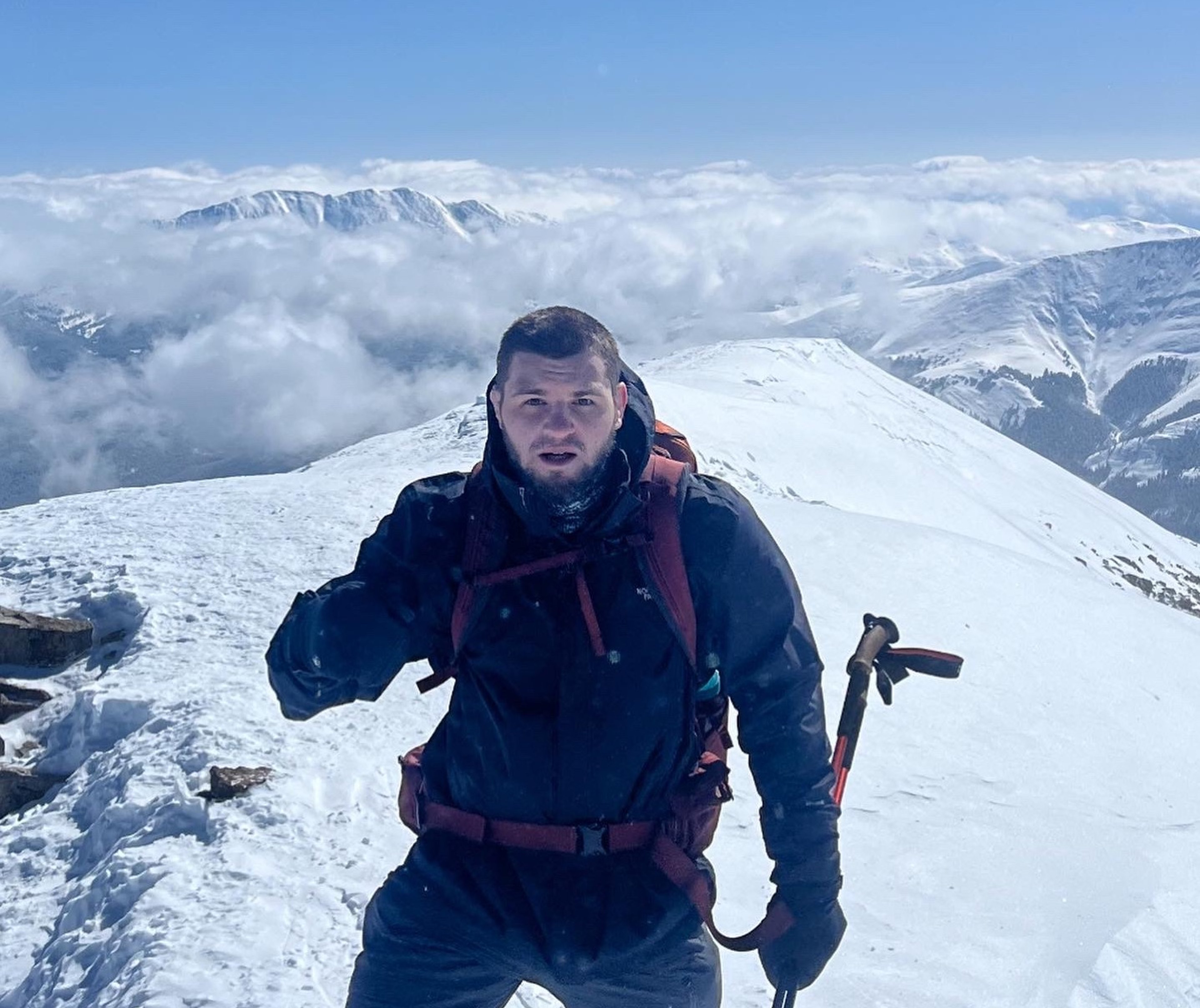
Near the top, I started feeling really off, but I pushed through. Coming down was the hardest mental battle I’ve ever had. When we got back to the car, I finally checked, and I was over 400 mg/dL with large ketones. I realized I was heading toward DKA – at altitude, after a brutal climb.
I managed to avoid the hospital because I could keep fluids down, but I was wiped out and had Kussmaul breathing for days. That was the moment I said, “Okay, I’m done guessing. I need a CGM.”
Helm: How has continuous glucose monitoring (CGM) changed your training?
Kunneman: It’s been a game-changer – especially for MMA.
In the mountains, sometimes it gets thrown off by cold, sweat, or altitude, but the trend data is huge. For training, that’s the main thing: I know if I’m heading up or down, and I can take care of it before it ruins practice.
To keep the sensor on, I use Skin Grip and either a long-sleeve shirt or a basketball sleeve. I’ve gone through hard scrambles in wrestling and jiu-jitsu, and it stays on great.
I also try not to have a ton of active insulin on board when I train. I like to eat a couple of hours beforehand so things have settled.
For lows, if I’m at home resting, 15 grams of carbs usually works. If I’m training, that’s not enough. In a hard session, I’ll treat with 30-40 grams, because I don’t want to bring it up just enough to crash again mid-round. In the mountains, I’ve treated with 50 grams and still only been at 90 mg/dL later – that’s how hard your body is working.
Helm: How do you approach a weight cut? What special precautions do you need to take as a person with type 1?
Kunneman: The last big chunk of a weight cut is mostly water, not fat.
Three to four weeks out, you clean up your diet and your training, and lose maybe five or six pounds. Then, about nine days before weigh-ins, you start water loading – two to three gallons a day – then gradually taper it. That ramps up your body’s flushing systems.
Two to three days out, you cut carbs and sodium so you stop retaining water completely. The day before or morning of weigh-ins, you sweat out the last few pounds with a sauna or hot baths. That’s when you’re the most depleted.
From a diabetes standpoint, when you slash carbs and calories, you have to slash insulin. Normally, I take 20 units of Lantus in the morning and 20 at night. During the final days of a cut, I might take three units total and run in the 140-180 mg/dL range because I’m barely eating anything that raises my blood sugar. When I rehydrate, I become really insulin-sensitive and have to be careful with rapid-acting.
None of this came from a playbook. I couldn’t find anything on “how to cut weight safely with type 1.” I had to figure it out by trial and error. It’s stressful, but it’s part of what I mean when I say this is uncharted territory.
There was another type 1 fighter, Jordan Williams, who was the first to get signed to the UFC. He never got a win there, so no one with type 1 has ever actually won a UFC fight. That’s what I’m chasing – to be the first one to do that.
Helm: What do athletic commissions allow you to bring into the cage to treat lows – and what did it take to get insulin approved?
Kunneman: Every state or country has its own athletic commission. They set the rules, and they can be super strict.
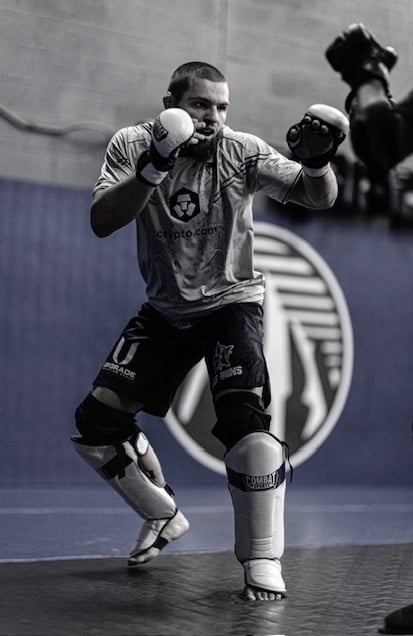 Some commissions don’t allow you to bring anything into the cage – no juice, no Gatorade, not even caffeine. I’ve had to fight in those states completely blind: no CGM, no sugar, no safety net. If you go low in there, you’re in big trouble because there’s no realistic way to get your blood sugar back up in time.
With the Contender Series, I also had to get a therapeutic use exemption (TUE) for insulin. Under anti-doping rules, insulin is technically a banned substance unless you have a medical need and documentation. Because there aren’t many (or any) fighters with type 1 at that level, it was new for them too.
I had to show proof of diagnosis from childhood and all the relevant records so the UFC, the commission, and the drug-testing agency knew that insulin is life support for me – not a performance enhancer.
I’m grateful the UFC has worked with me and taken it seriously, but yeah – every aspect of fighting is harder with diabetes.
Helm: Is there something you wish people without diabetes – training partners, coaches – understood about diabetes?
Kunneman: I wish they understood what it means when I have to step off the mat.
Training is structured: warmup, drilling, then live rounds. That’s the part where everyone is trying to push to absolute exhaustion. If my blood sugar goes low or way high and I have to step out, it can look like I’m tired or weak.
But the reality is, if I don’t step out, I could end up in a medical emergency. That tension is hard – especially in a culture where you’re supposed to be tough, push through everything, and never show weakness.
In those moments, I try to keep my standards high. If I miss hard work because of a low, I’ll add something – go run a few miles later, or push extra hard in another session. Not to punish myself, but so I can walk into a fight knowing I didn’t give myself an easy way out.
Helm: How do you stay mentally steady when there’s real danger – on a mountain, in a cage, or with a blood sugar that might crash?
Kunneman: The fear never fully goes away. If your blood sugar bottoms out in a fight, things can go south fast. The question is how you respond to that fear.
Climbing mountains (literally) helps me train that response. If I’m on a ridge with a huge drop below me and I focus on the drop, I start doubting every move. If I focus on what’s right in front of me – one step, one handhold – I can keep going.
I like what David Goggins calls the “cookie jar” – a mental jar of moments you can reach into when things get hard. Times you did something really tough and didn’t quit. I’m always trying to add to that jar: dangerous climbs, brutal practices, fights I wasn’t supposed to win – even hard days managing diabetes.
When I’m in a stressful spot, I can look back and think, “I’ve been here before in a different way. I climbed that peak. I walked around at 350+ on a mountain and survived. I can handle this, too.”
I don’t enjoy having diabetes, but it’s made me mentally stronger. It’s taught me how to be comfortable in uncomfortable situations – and that’s huge in fighting and in life.
Helm: What’s next for you?
Kunneman: Right now, I’m staying ready. The UFC told me to heal up after my injury, and they’ll keep me posted. Contender Series is seasonal, so the other path is a direct call-up to fill in on a UFC card.
I’m 10-0 with all first-round finishes. The goal is to get one more big win, keep building excitement, and be ready when that call comes. In the meantime, I’m staying in shape and staying sharp.
Helm: If a newly diagnosed kid who loves jiu-jitsu or MMA is told, “You should pick another sport, you can’t really do this with type 1,” what would you say?
Kunneman: I’d tell them to ignore the doubt and find out for themselves.
People are going to say all kinds of things. But if you set your mind and heart on something, the only thing that can truly stop you is your own mind. If you can win that battle, you’ll be amazed at what you can do.
You’ll have to be more disciplined than others – both with your training and your blood sugars. That’s just reality. But that discipline will also make you stronger.
There’s a quote from Isaac Newton I love: “If I have seen further, it is by standing on the shoulders of giants.” I’m standing on the shoulders of people who came before me – older generations with type 1, people who used pig insulin, and athletes like Jordan Williams.
My hope is that someone can stand on my shoulders and go even further – maybe the first UFC champion with type 1.
So to that kid, I’d say: It won’t be easy. But it’s possible. You’re not alone.
And if you strengthen your mind and stay disciplined with your diabetes, the sky’s the limit.
Learn more about sports and professional athletes with diabetes here: